
Why I Launch in the Dark: The Pre-Dawn Advantage Tournament Anglers Waste

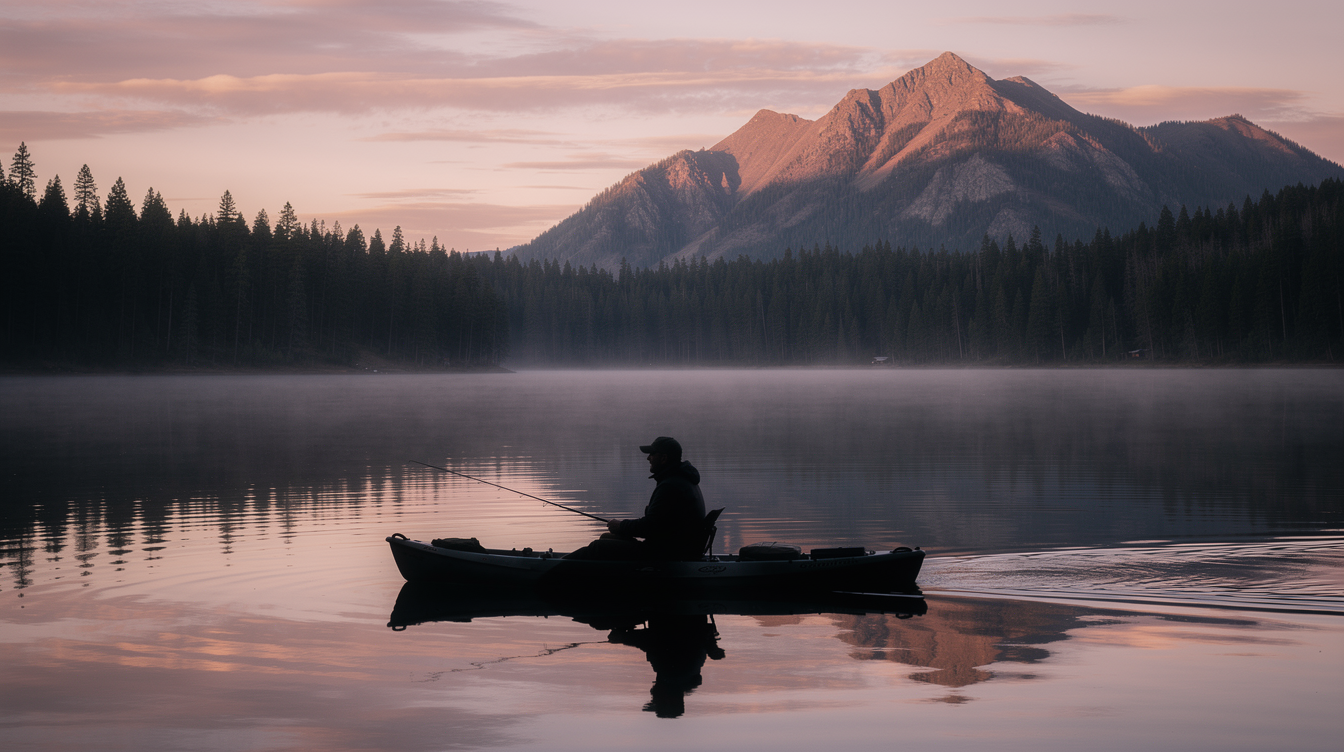
# Why I Launch in the Dark: The Pre-Dawn Advantage Tournament Anglers Waste
I don’t launch in the dark to fish. I launch to learn.
That distinction matters more than most tournament anglers want to admit. Because if you’re showing up at safe-light, rigging your last rod on the water, and making your first real decision of the day based on what you can see *after* the fleet has already started moving — you’re not fishing smart. You’re just fishing.
The **pre-dawn advantage** isn’t about more casts. It’s about a read you can only get once, and the window for it expires the second the first boat leaves the ramp.
—
## What the Lake Sounds Like Before Anyone Ruins It
4:45 a.m. Black water. No running lights except mine. The graph boots up and throws a pale glow across the bow. I kill the headlamp.
And I listen.
Shad flicking on a flat about sixty yards out — a sound like someone flicking a wet finger at a glass surface. Frogs along a dock line going quiet as I ease closer. Not all at once. In a line, which tells me exactly how spooky that bank is and how tight to the edge the fish are holding. One dock light throwing a thin shadow seam across the surface. A carp rolling near the inlet.
None of that is visible. All of it is data.
By 7:00 a.m., that same flat has had three trolling motors running across it, two sonar pings per second from every boat that idled through, and whatever wake came off the ramp during launch chaos. The shad have scattered or pushed shallow. The frogs are gone. That dock light shadow line means nothing now because nothing is staging on it anymore.
The dark version of that lake was the true version. You just have to be there for it.
Sound is intelligence. The dark gives you sound. You cannot hear a shad pop when twelve trolling motors are running up the flat and every bilge pump in the marina is cycling. You lose that entire layer of information the moment the community wakes the water up.
—
## What Darkness Actually Tells You
Let me get specific, because “launch early” is advice a magazine gives. This is what you’re actually reading.
**Bait position before the scatter.** In the dark, shad stack in clean, readable bands. Against a dock line. Suspended over a mid-lake hump. Piled into the corner of a seam. That’s the real bait picture — where they actually were before light pressure and boat traffic pushed them. After safe-light, the same bait is scattered and moving. Pre-dawn tells you the origin point. That tells you where to *start*, not just where fish might theoretically be.
**Wind you can actually trust.** Pre-dawn wind reads are clean. No wake stacking, no chop from ramp traffic. I can feel whether a bank is getting a true sustained push — the kind that repositions bass and sets up a feeding lane — or just ambient slop. Choosing between the windy bank, the sheltered bank, and the transition line is a legitimate decision at 4:45 a.m. At 6:30 a.m. with boats crossing every direction, you’re guessing.
**Whether your area is already burned.** Three trucks in the parking lot at 4:30 a.m., parked closest to the launch that puts them on your money spot. That’s data. A wake line already carved into a backwater before safe-light means someone made the same call you did — and they got there first. I’ve recalibrated my starting area before the tournament clock even started because I could see the parking lot at launch. That’s not paranoia. That’s pattern recognition.
**What the lake did overnight.** Water dropped two inches. Wind-blown debris stacked against a bank that wasn’t a seam yesterday but absolutely is one now. A temperature shift that moved bait off the shallow flat. Current that kicked up from overnight rain two counties upstream. None of that is readable once forty boats have churned the surface. At 4:45 a.m., it’s sitting right there in front of you.
—
## The Mechanical Stuff Nobody Talks About Until It Costs Them
Here’s the unglamorous version of the pre-dawn advantage.
Trolling motor that’s pulling weak. Graph that boots slow. Battery connection that’s *almost* making contact. Knots you thought you tied last night that you actually just thought about tying. Headlamp that’s on its last twenty minutes of battery life.
Found at 4:45 a.m.? Fixable problem.
Found at takeoff when the tournament director is counting down? Tournament over.
I have been there. Not proud of it. I once launched at safe-light for a tournament and realized my graph wasn’t reading depth correctly about forty minutes into my run to my first spot. By the time I figured out it was a transducer connection issue, I’d already burned the highest-value window of the morning idling around confused.
Darkness exposes friction. If your rig has a weak point, the dark will find it before the clock does — but only if you give it time to. That’s not a “be prepared” speech. That’s just the math of how tournament mornings actually go wrong.
—
## The Morning I Was Technically Early and Mentally Late
I had a spot I’d pre-fished twice. Understood the structure, knew where the fish were sitting, had a clear plan. I launched at safe-light, ran straight there, and spent the first ninety minutes getting absolutely nothing.
Finally — *finally* — I slowed down enough to actually look at the bank instead of just casting at it. Water had dropped three inches overnight. The flat I’d been bombing was high and dry compared to when I’d pre-fished it. The fish had moved a full two hundred yards to the next transition, which was now holding the depth break I thought I had.
The debris line told that story. The bait wasn’t where I expected it. The signs were all there at first light. But I was already committed. Already casting. Already behind.
“I was technically early. I was mentally late.”
That’s the failure mode nobody talks about. You can be at the lake at 5:30 a.m. and still be making your first real observation-based decision at 8:00 a.m. if you skipped the read and went straight to fishing. The pre-dawn window doesn’t work if you spend it launching gear or tying knots you should have tied the night before.
—
## Why This Hits Different From a Kayak
I’m six inches off the water. My hull draft is minimal. My noise footprint, even with a pedal drive ticking over slow, is a fraction of what any bass boat throws off.
The pre-dawn window amplifies every advantage I already have in a kayak.
I can slip into position on a seam, stop, and *not move* while I listen. I can park in eighteen inches of water at the exact corner where the bait is stacked and just sit there for five minutes without spooking anything, without burning the spot, without creating the wake that a conventional boat has to deal with just from idling in.
Bass boat anglers have to idle, trim, kill the motor, drift, and correct. By the time they’re settled, the subtle surface activity they were reading has already adjusted around them.
I just stop. And listen.
The best reason to launch in the dark is not to fish longer. It’s to see the lake before everyone else changes it. And in a kayak, you can move through that dark window like a ghost, gathering a read that a more disruptive vessel simply cannot get without compromising the same information it’s trying to collect.
—
## The First Cast Matters Less Than the First Read
A tournament is often won or lost before the first cast because the quality of your read determines where that cast happens.
The pre-dawn window is an intelligence operation with a hard expiration time. That expiration hits the moment the first boat leaves the ramp. After that, the lake you’re reading isn’t the real lake. It’s the pressured version. The compromised version. The version every other angler on the water is trying to interpret too.
I read the real one first.
That’s not a hustle flex. It’s not toughness culture. It’s not some romance about being one with the water at dawn. It’s just math. By the time most tournament anglers make their first cast, I’ve already made my first decision. And it’s based on something they’ll never see.
The lake is honest in the dark. You just have to show up before it has a reason to lie.
—
*What does your pre-dawn window actually look like? Are you rigging, idling, listening — or sleeping until safe-light? Drop it in the comments. I’m genuinely curious whether anyone else is out there at 4:30 a.m. doing the same kind of reads, or whether I’m just alone on the water talking to the frogs.*