
AI Killed My CRM: How One $20 Automation Saved 12 Hours a Week

# AI Killed My CRM: How One $20 Automation Saved 12 Hours a Week
It’s 10:47pm and I’m logging a lead like a caffeinated intern on his first week.
Zillow inquiry came in forty minutes ago. Boise family, eyeing a lakeview cabin outside Sandpoint, budget around $750k, needs dock access, wants four bedrooms. Classic North Idaho dream buyer. I should be excited.
Instead I’m staring at a CRM login screen, tabbing through fields, copy-pasting an address, trying to remember which pipeline stage means “interested but not ready,” and drafting a follow-up email that sounds exactly like every other follow-up email ever written by anyone in the history of real estate.
*Thanks for your inquiry. I’d love to help you find your perfect North Idaho home.*
God, I hate that sentence.
By the time I finished logging everything and hit send, it was 11:20pm. The buyer was probably asleep. I definitely should have been. And somewhere in the back of my head, I knew: they were making a decision right now, tonight, and I was building a database.
Those two things are not the same race.
—
## The CRM Was Never the Problem
I need to be honest about something before I blame the software.
The CRM didn’t fail me. I was using the wrong tool for the wrong rhythm, and I kept expecting it to fix a problem it wasn’t designed to fix.
Enterprise CRMs are built for brokerages. Fifty-agent teams with pipeline managers and quarterly forecasts and someone whose actual job is to update the system. I am not that operation. I’m a one-person shop moving five to ten deals a year in North Idaho, where buyers go quiet for three weeks because their brother-in-law talked them out of it, where snowbirds surge in January and vanish by April, where “the cabin deal” has a dozen emotional landmines that don’t fit neatly into a dropdown menu.
Research I dug into confirms it: 70.3% of CRM data goes stale annually. Seventy percent. I was paying for a platform and letting most of the data inside it rot because updating it consistently required a kind of linear, systematic attention that my ADHD brain simply does not produce on demand.
The rigid UI. The task avalanche. The seventeen fields I was supposed to fill in before I could get to the two that actually mattered.
It wasn’t a productivity tool. It was a guilt machine with a monthly subscription fee.
—
## What “Before” Actually Looked Like
Here’s the real accounting, because percentages don’t mean anything without texture.
– **~45 minutes per evening lead**, logged manually: preferences, timeline, budget, source, notes, follow-up task, calendar entry. Every. Single. Time.
– Weekends interrupted for data cleanup. Saturdays in January that should have been on the water, spent reconciling Priest River leads that went nowhere.
– Follow-up that started strong and died quietly. I was in the 48% of agents who follow up once, maybe twice, then lose the thread. Not because I didn’t care. Because the friction was high enough that the thread just… dropped.
– A platform with features I never opened, billing me every month for the privilege.
The real cost wasn’t the money. It was the Saturday morning in February when the kayak sat in the garage and I sat at a desk chasing dead leads I should have triaged two weeks earlier.
That’s the version of this story that actually made me change something.
—
## The $20 Fix (Which Is Embarrassingly Simple)
Here’s what I built. No mystification.
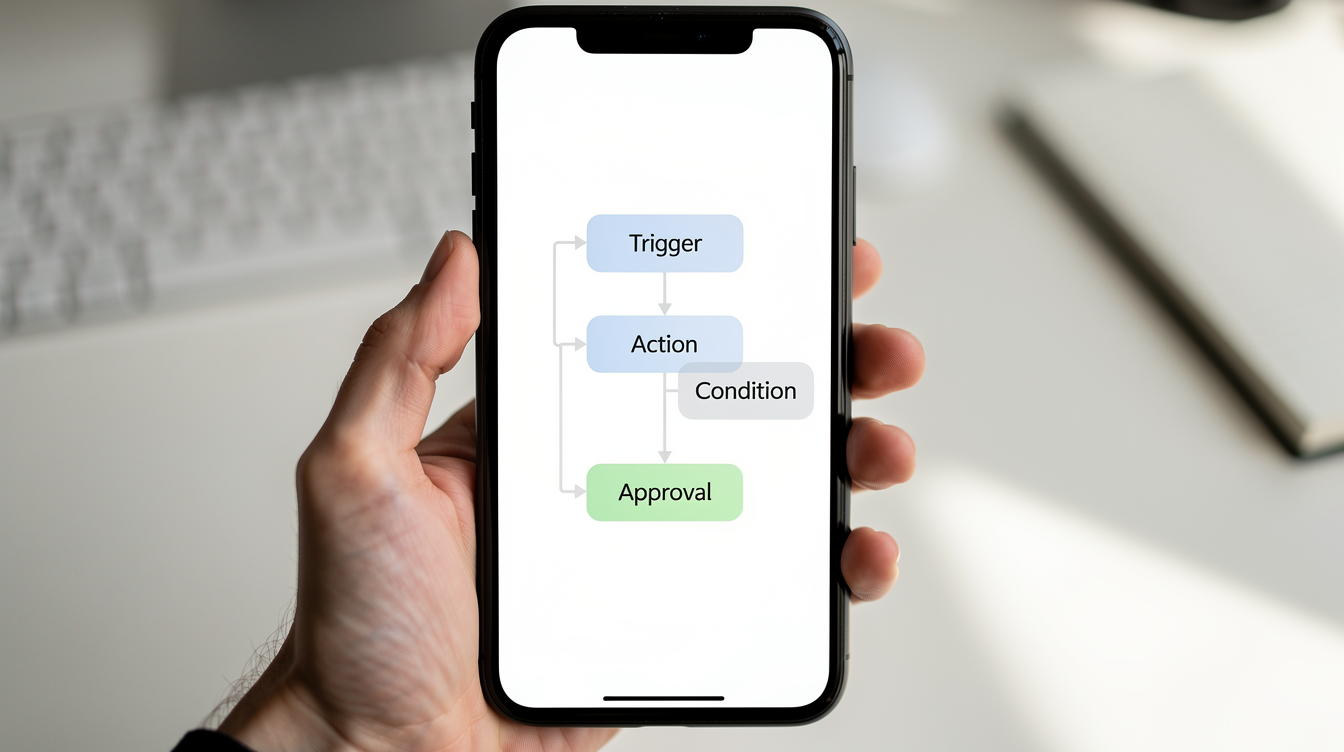
A Zapier flow — Zapier has a free tier, paid tier runs about $20/month depending on volume — that monitors my Google Voice texts. When a lead comes in, it fires into Airtable, which I’m using as a lightweight data layer. Claude (Anthropic’s AI, accessible via API) summarizes the buyer signals from whatever they said or texted — things like “hesitant on schools, serious about dock access” — and scores that against North Idaho MLS comps I’ve already pulled.
Then it drafts a response. Three sentences. Personalized. Sent automatically.
Total tool cost: roughly $20/month. Sometimes less.
What that 10:47pm Zillow inquiry looks like now: lead hits, intent gets scored (viewed the listing three times — that’s high interest), a comp from a similar Sandpoint listing that sold last month at $720k gets pulled, and a text goes out within six minutes that says something like: *Hey — saw you’re interested in dock access on the lake. We had a similar four-bed close near Sandpoint last month at $720k. Happy to send you the details tonight if you’re still up.*
I’m asleep. The reply is already sent. The buyer, who is definitely still up at 11pm because they’re actively looking, gets a response that sounds like I know what I’m talking about — because the system does.
Agents with AI-timed nurturing close 27% more deals without adding a single new lead to the pipeline. That’s not a time-saver stat. That’s a conversion stat. It resurrects the leads you would have followed up with tomorrow morning, when the buyer’s window has already closed.
—
## 12 Hours Back. Here’s What I Did With Them.
Saturday morning. February. Bonner County.
Kayak’s in the water by 7am. Phone is quiet. The automation is doing what I built it to do, and I’m doing what I do: reading the water, watching where the baitfish are holding, thinking about absolutely nothing that involves a CRM field.
That’s the “after.” That’s the actual ROI.
The 11pm inquiry now gets a reply in under ten minutes instead of the next morning. Buyers in that decision window are gone by morning — I know that now because I *was* the agent who called the next day and got silence. The gap was costing me closes I never even knew I’d lost.
The ADHD piece lands here in a way that matters: when the system runs itself, my attention goes where it actually produces something. Reading the buyer in the room. Knowing which lakeview properties have dock issues that aren’t in the listing. Being present for the negotiation instead of mentally drafting a follow-up email while someone’s talking to me.
Twelve hours a week recovered. Not hypothetically. Actually.
—
## Why Most Agents Won’t Do This
It’s not that agents can’t set this up. It’s that they’ve been told the solution is a bigger, more expensive platform — so they keep looking in that direction.
Salesforce isn’t designed for you. Follow Up Boss with all the integrations isn’t designed for you. The enterprise CRM industrial complex sells to brokerages because that’s where the contract value is. Solo operators are an afterthought, and the tool shows it.
The trap is “integrate everything.” Sounds like sophistication. It’s actually overhead. For a 1-to-10 deal-per-month operator in North Idaho, the right move is to *replace* the CRM logic with something lighter, not add an AI layer on top of a system you’re already not using correctly.
Quick gut-check: How many features in your CRM have you never opened? That’s not a tool. That’s a subscription to guilt.
—
## How to Actually Start (The Real First Step)
Pull 10 leads from the last 30 days. Just 10. Run a response-time audit.
– How long did it take you to reply?
– What did you say?
– Was it personalized, or was it the “Thanks for your inquiry” sentence I used to hate writing?
From there: build one Zapier zap. One. Not a system. One trigger and one action. Start with the most painful thing — probably lead response time. Hook your lead source to a notification or a draft. See what happens.
Track one metric for 30 days: time to first reply. Watch it drop. That number will tell you more about whether the automation is working than any dashboard ever could.
The stack that works for me:
1. Zapier — free tier or ~$20/month
2. Airtable — free tier covers most solo agent needs
3. Claude or GPT for summarization and reply drafting
4. Google Voice as the lead capture point
No IT department. No vendor onboarding call. No six-week implementation.
—
## The CRM Isn’t Dead. I Just Stopped Feeding It.
AI doesn’t make you a better agent.
It clears the administrative brush so you can actually *be* a good agent — show up present, know your market, be reachable at 11pm without losing sleep over data entry.
The stuff that closes deals in North Idaho isn’t in a CRM field. It’s knowing that the cabin on Priest Lake has a septic issue the seller hasn’t disclosed. It’s reading the hesitation in a buyer’s voice when they say “we’re pretty flexible on timeline” and knowing they’re not. It’s being the agent who shows up Saturday morning to walk a dock instead of the one who sent a generic email at 11:30pm.
The automation handles the pipeline. I handle the people.
What’s the thing in your workflow that’s eating 12 hours a week that you’ve just accepted as the cost of doing business?
—
*If you want to see the actual Zapier flow I built — the real one, not a cleaned-up version — drop me a message or leave a comment. I’ll walk you through it. No upsell. Just the build.*