
AI Triage: How I Sort $4000 Worth of Leads in 17 Minutes Flat

# AI Triage: How I Sort $4000 Worth of Leads in 17 Minutes Flat
You know exactly what Saturday morning looks like when you’re an agent.
Forty leads sitting in the Ylopo dashboard. Lake Pend Oreille is out there, glassy and perfect, and the kayak is already on the truck. Phone buzzing. Coffee getting cold. And somewhere in that pile of form submissions and half-filled IDX registrations is the story you tell yourself every week: *maybe this one’s real.*
So you open them. All of them. One by one, like scratch tickets. You chase the maybe. Two hours disappear before noon, and by the time you’ve worked through the stack, you’ve got three voicemails that won’t get returned and a knot in your chest that feels like work but wasn’t.
Here’s the math nobody wants to say out loud: at $100 a lead, that $4,000 sitting in your dashboard is mostly noise. Three to six of those forty are actually worth a conversation. The other thirty-four will ghost you, string you along, or turn out to be seven months from being ready to do anything. The problem isn’t the money. It’s that you can’t tell which ones are real until you’ve already burned your Saturday finding out.
AI doesn’t work your leads. **AI kills 80% of them so you can work the 20% that are real.**
That’s the whole job.
—
## The Real Problem Isn’t Volume — It’s the Lie Volume Tells You
The industry pitch is seductive: buy more leads, run longer nurture cadences, volume wins. And yeah, if you’re running a team of twelve with a dedicated ISA fielding calls eight hours a day, maybe that math works.
For a solo North Idaho agent? It inflates your CRM with dead weight and turns your phone into a distraction machine at exactly the wrong moments.
Here’s what I actually use to separate a lead from a contact. I call it triple intent: **timeline, financing, motivation**. All three. Not one. Not two.
If someone can’t produce all three in the first exchange, they’re not a lead yet. They’re a contact. That’s not a judgment — it’s a classification. And treating every contact like a lead is exactly how you burn four hours on a Saturday chasing ghosts.
An IDX chatbot that auto-pulls MLS comps on a 3-bed in Hayden without asking “financing locked?” or “what’s your move-in window?” is generating activity, not qualification. You’re still doing the real work manually, just later, when you’re tired and more likely to miss it.
—
## What the 17-Minute Workflow Actually Looks Like
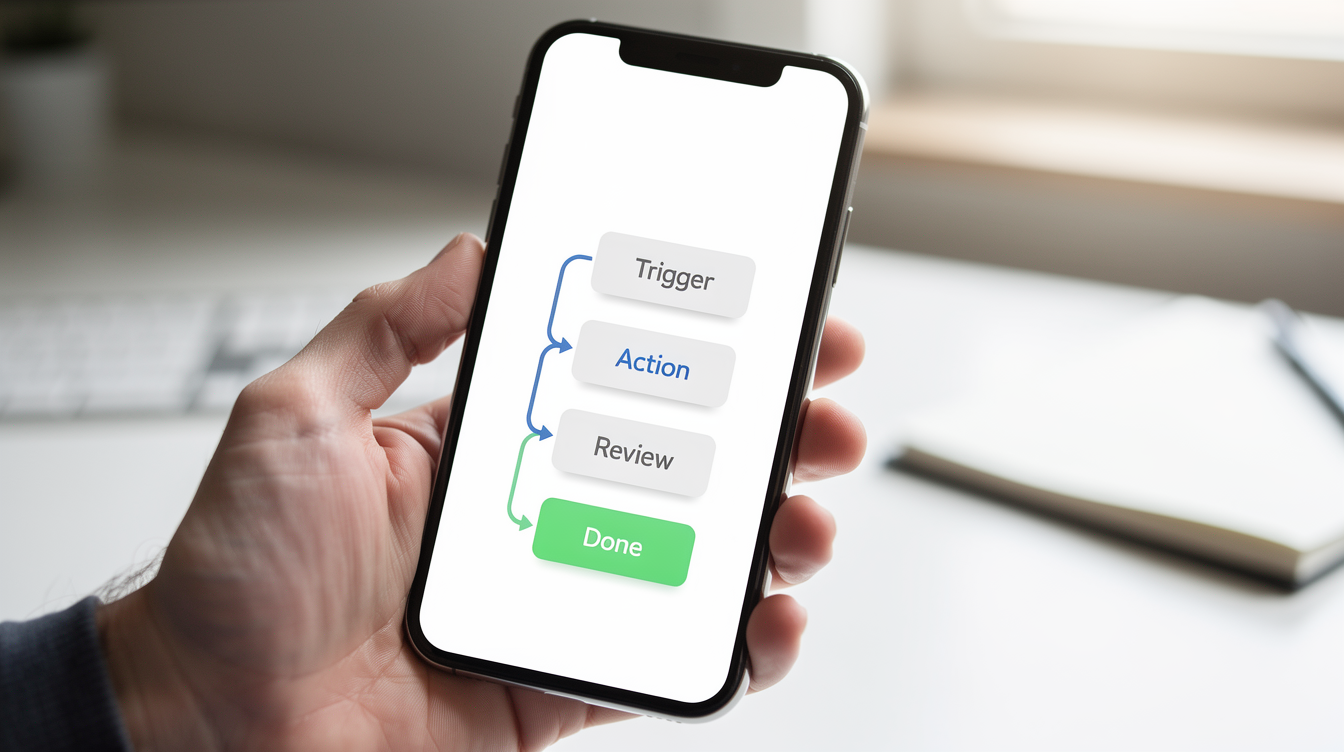
Here’s what this looks like on a real Saturday morning. Not theoretical. Four steps.
**Step 1 — Pull (2 minutes)**
Export the week’s leads from Ylopo or Real Geeks. CSV. Done.
**Step 2 — Qualify and Enrich (8 minutes, automated)**
Bulk-feed to Lindy. Multi-agent flow runs automatically. One agent asks budget, timeline, and motivation in plain conversational language — not a form, not a drip email. Smartzip enriches with predictive seller data in parallel. By the time it’s done, leads are scored and the CRM is updated and I haven’t touched my phone.
**Step 3 — Intent Scan (4 minutes)**
Perspective AI reads the conversation transcripts for verbatim motivation signals. Actual words the prospect used, not paraphrased summaries. This is where triple intent gets confirmed or killed. Sixty-five percent of leads leak right here because they can’t produce all three signals. That’s not a bug. That’s the point.
**Step 4 — Manual Override (3 minutes)**
Top five get tagged in Lofty. SMS handoff fires automatically. Calendar opens for bookings.
Output: four real pursuits out of a $4,000 stack. The other thirty-six are gone, and you feel nothing about it. That’s not callousness. That’s clarity.
Treat leads like fish strikes. Miss the hook set and they’re gone. AI sets the hook or you spend all day trolling empty water.
—
## Three Times This Got Real
**The 11pm Contractor Lead**
Roof AI flags a 3-bed inquiry in Hayden. Looks warm — MLS comps auto-attached, response rate looks good. You text at midnight. Chase for three days. Turns out it’s VA loan limbo with no pre-approval and a timeline of “maybe next spring.” Dead.
Triage fix: Perspective AI intake captures “budget: $450K max, timeline: June, motivation: job transfer” in the first exchange. Score comes back 8/10. Auto-SMS summary hits my phone at 8am. I respond when I’m ready, with context, not scrambling.
**The Facebook Flood**
Fifteen Ylopo leads from “Idaho lake homes” ads. $80 a lead. $1,200 spent before anyone picks up the phone. Lindy tests each one: “Returning your call on the Post Falls waterfront — pre-approved? Down payment ready?” Three route to my calendar. Twelve don’t reply within 24 hours and get buried. I made twelve correct decisions without making any of them. That’s the part that still gets me.
**The Sphere Text**
Ex-client pings on a Sunday: “Thinking of selling the cabin.” Follow Up Boss aggregates it with eight similar texts. No intent filter — just a pile of maybe. Crescendo.ai runs a multi-agent flow: one agent asks motivation and timeline, another enriches with county tax records. One flags as an expired listing that’s ready to move. Forty-eight hours later, closed. The other seven stay in nurture until they turn real. No heroics. No guesswork.
—
## What I Got Wrong Before This Worked
Generic ChatGPT prompts don’t audit funnels. They rewrite listing descriptions. That’s a different problem and a much smaller one.
I skipped the Zapier-to-Lindy webhook into Follow Up Boss for two months because it seemed like overkill. That lag cost me a $1.2M lakefront deal. Hot tag sat unrouted while I was manually scanning the CRM. Lesson learned the expensive way.
The ADHD-specific piece: Lindy’s human-in-loop flag — where only the top 10% of leads ever hit my eyes — wasn’t a feature I wanted. It was a feature I needed. Spending four hours a week on Ylopo voicemails that ghost isn’t a character flaw. It’s a tax this brain cannot afford. Building around that reality isn’t a workaround. It’s the system.
One more thing that took me longer than it should have to accept: sphere converts at four times the rate of paid traffic. The AI triage stack has to prioritize those sphere texts first, or the paid ad volume buries the signal that actually matters.
—
## What This Isn’t
It’s not a replacement for follow-up. The 20% that survive triage still get a human. That’s the whole point — you have time to actually be present with them because you stopped pretending to be present with the eighty percent who weren’t ready.
It’s not a set-it-and-forget-it nurture bot. Volume-blasting every lead with AI cadences is the old model wearing new software. This is a filter, not a sprinkler.
And it’s not just for high-volume teams. This workflow was built by one agent who wanted his Sundays back. That’s it.
—
## What the 17 Minutes Actually Buys You
The 17 minutes don’t buy you more commissions. Well — they do, eventually. But that’s not the actual product.
The actual product is permission to stop thinking about the other thirty-six leads. That’s it. The right to let the noise go without guilt, without second-guessing, without the 11pm “what if I missed one” spiral.
On the listing side, Epique already runs that same principle — professional photography covered on every listing, Zillow Showcase upgrade, property videos, transaction coordination, all of it. Nothing manual that doesn’t have to be. The AI triage workflow is that same philosophy applied to the lead side. Full stack. Solo operation. No sacrificing quality to run the volume.
The four hours you get back are yours. Kayak on the truck. Coffee still hot. Lake doing what lakes do on a Saturday morning in North Idaho.
What would you do with them?
—
*What are you using to triage right now? Genuinely asking — I’m curious how other solo agents are handling this. Drop it in the comments or shoot me a message. If there’s enough interest, I’ll put the Lindy agent setup into a template and share it out.*