
Silent Strike: What Fish Do When Tournament Anglers Stop Looking

# Silent Strike: What Fish Do When Tournament Anglers Stop Looking
The skip lands clean. Two pops. Then I shift my weight to reach for my water bottle and the rod tip dips, the line goes marginally slack, and the bait just… sits there.
The fish eats.
Not during the pop. Not on the skip. In the nothing between.
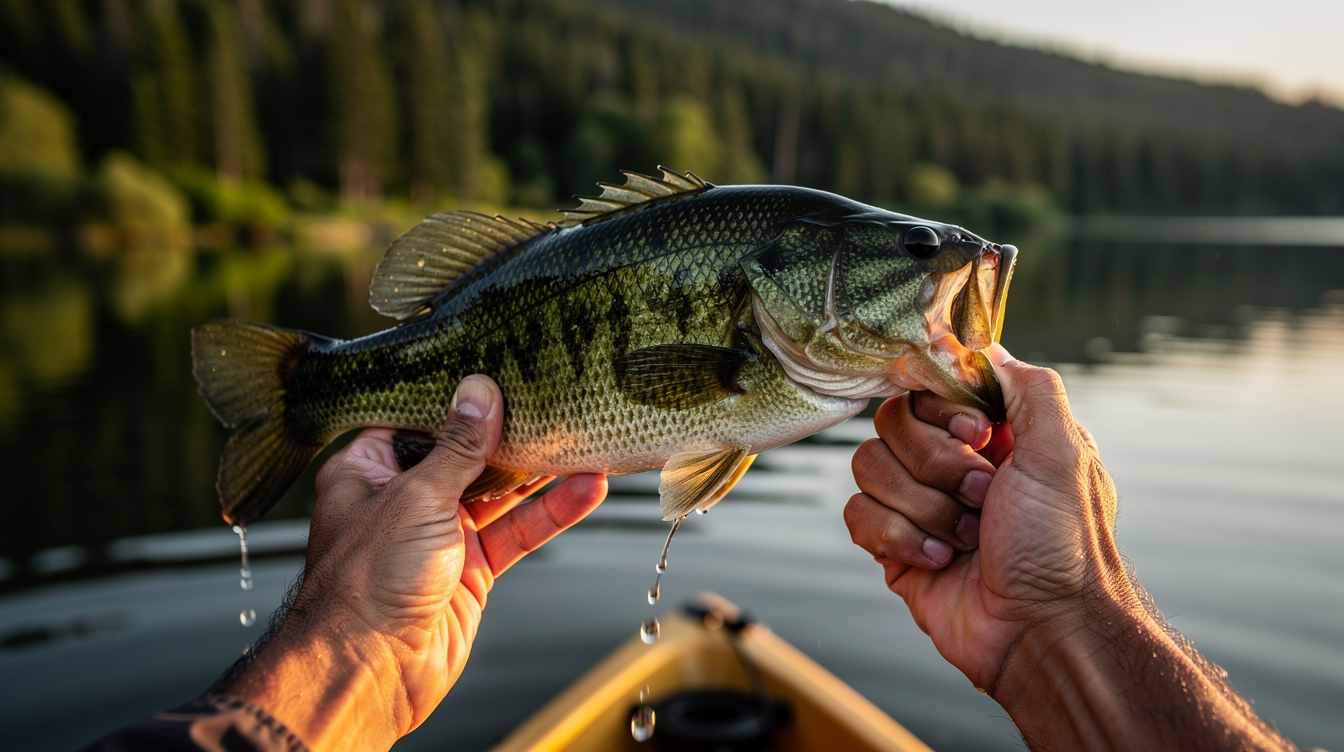
I didn’t even have my hand on the rod when it happened. I felt the line jump through my fingertips before my brain caught up. Set the hook on instinct. 14.2 inches on the board, released clean.
The fish didn’t bite when I was selling it. It bit when I stopped.
—
## Keep It Moving Is the Worst Advice for Pressured Water
The whole internet is built on reaction bites. Trigger the strike. Cover water. Aggressive retrieve. Fast-twitch the fish into eating before it has time to think.
That’s not wrong everywhere. But it’s wildly incomplete for the water I fish in competitive formats, and I think it costs a lot of tournament anglers inches they never know they lost.
Here’s the frame I keep coming back to: movement tells the fish something. Stillness tells the fish something different.
Every retrieve — every twitch, every crank, every lift-and-drop — is information. And in pressured tournament water, a lot of that information reads as *controlled by something with intention*. Which, to a bass that’s been educated by a thousand casts, translates directly to threat.
A lot of tournament fish aren’t choosing based on hunger. They’re choosing based on risk management.
That’s not poetry. That’s just pattern recognition from spending enough hours watching what actually triggers a bite versus what anglers think triggered a bite.
—
## The Fish Isn’t Gone. It’s Evaluating.
In pressured water, bass have been hit with crankbaits, pitching jigs, wacky rigs, topwaters, and chatterbaits for months. The fish that are still there — the ones not already in a livewell from a tournament two weekends ago — they’ve survived by learning a pattern.
Movement equals risk. Something motionless is worth inspecting.
The pause removes the “controlled by something” signal. The bait stops acting like a threat. That’s when the fish can actually commit.
**The fish isn’t waiting for movement. It’s waiting for movement to end.**
That’s the whole reframe. Everything else in this post is just evidence.
—
## Here’s Where I’ve Watched This Happen Over and Over
### The Dock
Bass under docks don’t hold where you think. They’re behind the floats, beside the rope ties, tucked into shade lines along the crossbeams — not in the obvious pocket where your skip lands.
The skip tells the fish something is there. The pause gives it permission to move.
I’ve missed this bite more times than I can count because I was already mentally repositioning for the next cast. The eat happens when the angler repositions, not when the angler is focused. That’s not an accident. The moment your attention shifts, the bait goes neutral. That’s the window.
### The Grass Edge
Fish tracks your chatterbait or jig for six feet. You think it missed or wasn’t interested. You fire another cast. You move on.
What actually happened: the fish was pacing it. Crossing pressure thresholds. Building toward commitment. And what it needed was for the lure to stop moving.
A follow with no bite isn’t a failed presentation. It’s a fish that needed one more second of stillness and didn’t get it.
In clear-to-stained water especially, a moving bait is easy to track but hard to commit to. The inspection moment only happens when the target goes still long enough to stop feeling dangerous.
### Post-Frontal Lockdown
Bluebird sky. Slick water. High pressure. Fish glued to cover like they’ve been stapled there.
The aggressive presentation gets ignored or spooks. I know. I’ve thrown everything at those fish with exactly that result.
What actually works: deadstick. Ned rig sitting on bottom. Weightless Senko doing absolutely nothing. Not because the fish are “off the bite.” Because the fish need a longer window to overcome hesitation. The window isn’t shorter on post-frontal water — it’s *longer*. And most anglers don’t give it that.
The fish isn’t refusing. It’s waiting for something that doesn’t feel dangerous. Give it that, and sometimes you pick up total inches nobody else is finding.
—
## Your Kayak Is Making More Noise Than You Think
Here’s the part nobody wants to talk about.
A kayak fishing scenario creates a specific disturbance footprint: paddle drip hitting the surface, hull slap on small chop, anchor thump, aggressive body repositioning, a rod sweep that telegraphs through the water column. The fish doesn’t care whether you’re on a kayak or a bass boat. It cares whether the environment returned to “safe” after the disturbance.
So when I’m talking about stillness in a tournament context, I’m not just talking about the lure. I’m talking about a full stack:
– Kayak stabilized and not drifting into the cover
– Paddle out of the water, drip-free
– Rod tip controlled, not twitching
– Line angle managed so there’s no drag on the bait
– Body position locked, weight centered
– Slack acknowledged and left alone instead of “fixed” with a micro-twitch
That last one is brutal. The instinct when you feel slack is to take it up, to stay connected, to feel what’s happening. But sometimes that impulse is what kills the window. The slack is part of the neutral signal. Leave it.
And if you spook a fish — if the kayak drifts wrong or the anchor goes in too hard — the counterintuitive move is to not immediately fire another cast. Back off. Let the water reset. Give it longer than feels reasonable. Fish return to position faster than most anglers expect, as long as nothing else happens after the initial disturbance. The second cast that “fixes” it usually just extends the problem.
—
## The Window Exists. The Problem Is You’ll Kill It Before It Opens.
Knowing about the pause is the easy part.
Trusting it is something else entirely.
The honest version: I kill the deadstick window all the time. Four seconds in, I get bored. I assume nothing is happening. I want the lure to do something. I feel weirdly out of control when I’m not manipulating it — like I’m not actually fishing, just sitting on the water hoping.
My ADHD brain does not love stillness. Shocking, I know.
But here’s what experience teaches you to feel inside that stillness, if you let it exist long enough:
– The line jumps a fraction before anything else registers
– The rod loads slightly differently than it did two seconds ago
– The bait feels heavier before the thump comes
– The fish is already there before your brain consciously processes it
None of those signals exist during the retrieve. They only exist in the stillness. You can’t feel them if you’ve already moved.
The pre-strike confirmation is real. It’s learnable. But it requires trusting the window long enough for the fish to give it to you.
—
## If the Fish Followed, Missed, or Hovered — Don’t Move Yet
Here’s the rule, stated plainly.
If the fish was clearly interested but didn’t eat — you saw it, felt it, watched it track — the reflex move is to do more. Twitch again. Recast. Speed up. Try to re-trigger it.
Don’t.
Extend the dead moment. Let it sit for longer than feels reasonable. Longer than that. The fish is still there and still evaluating. You moving the bait again tells it exactly what it was afraid of: that the thing is controlled. That it’s dangerous. That it was right to hesitate.
Don’t recast over it. Don’t twitch. Let the bait stay where it landed in the water column and do nothing.
**The strike window isn’t the cast. It isn’t the retrieve. It’s the tiny reset when the fish decides the bait stopped acting like a threat.** That window is yours to manage — but only if you stop trying to control it.
If you’ve fished competitive kayak tournaments and you’ve felt this — the eat that came out of nowhere, in the nothing, when you weren’t even looking — drop something in the comments. I want to know where it happened.