
I Finally Had Enough. I Had No Idea What Enough Felt Like.

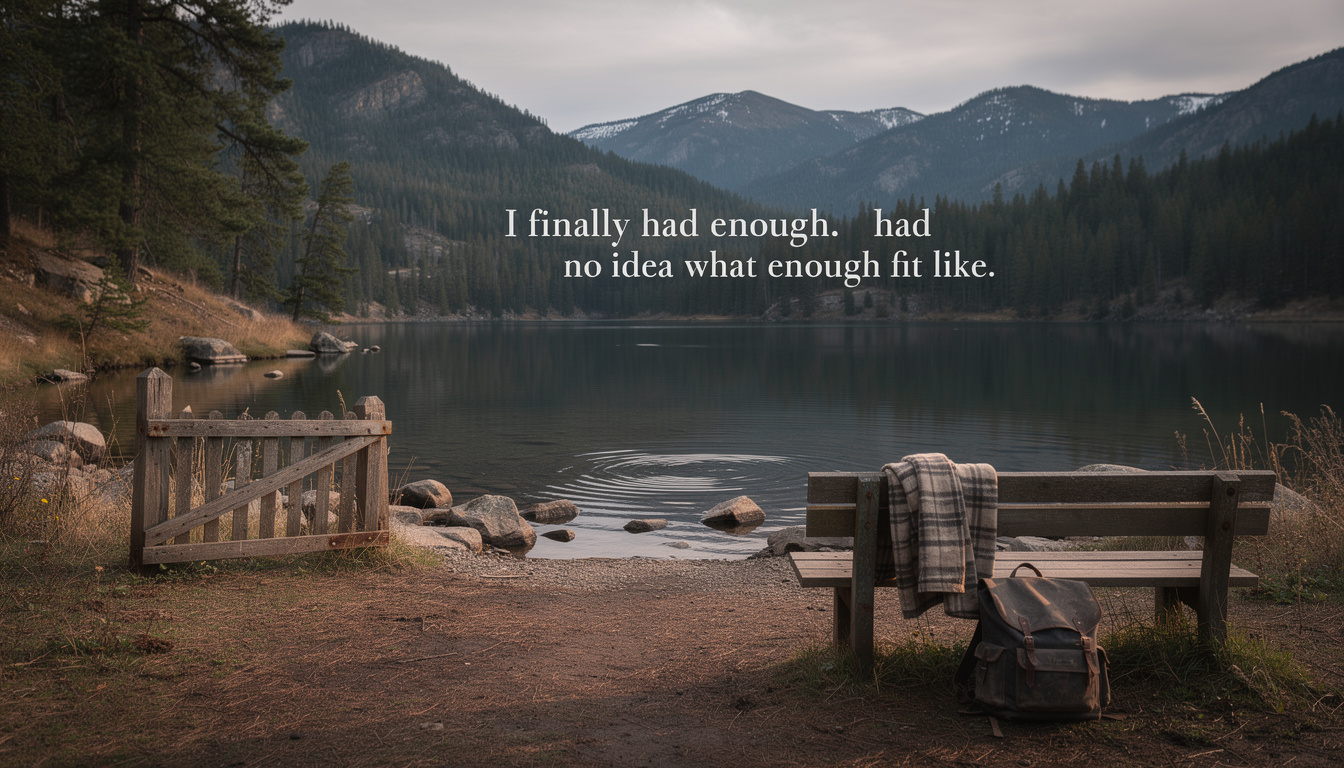
# I Finally Had Enough. I Had No Idea What Enough Felt Like.
The business is running.
The pipeline isn’t empty. The inbox isn’t a dumpster fire. Nothing is broken, nothing is behind, nothing is screaming.
And I’m still checking the bank account at 7am like something is about to detonate.
—
That’s the part nobody talks about. Not because they don’t know it’s happening — but because naming it feels ungrateful. Or worse, delusional. *You have enough and you’re still anxious? What is wrong with you.*
Here’s what I’ve figured out about **inhabiting enough**: getting there and knowing what to do once you’re standing in it are two completely different problems. And for a long time, I didn’t know that second problem existed.
—
## The Operating System Ran the Show
I didn’t come up in a world where stability was the default setting.
I’ve been 3 months in with no money. I know what it feels like to pick up the phone after being told no a thousand times because tomorrow’s work depended on tonight’s call. I know what it means to never turn anything down because you genuinely didn’t know when the next one was coming.
That’s not drama. That’s just the physics of building from scratch.
And the rules I built around it made sense. Answer every message. Check the account daily. Never relax into a good stretch because a good stretch has ended before. Treat stability like a trick — because sometimes it was.
The logic wasn’t wrong. It was solving a real problem.
The problem is that the logic didn’t come with an off switch.
—
## The Floor Started Holding. I Didn’t Notice.
At some point — not one moment, not a dramatic pivot — the emergency started to quiet.
The pipeline held. The systems ran. The worst-case scenario kept not happening.
And my nervous system kept running threat detection anyway.
The inbox felt like an emergency even when it wasn’t. A quiet week felt like a warning, not a sign that things were okay. I’d check the bank account, find nothing wrong, and feel something close to suspicion instead of relief. Like the numbers were lying. Like I’d missed something.
I kept waiting for the pressure to disappear. It already had. My habits hadn’t caught up.
That’s the thing nobody prepared me for. The brain gets locked onto lack. Scarcity doesn’t just shape decisions while you’re in it — it can keep running after the emergency is over, because somewhere along the way, stability started feeling suspicious and motion started feeling like safety.
So I kept moving. Not because there was a fire. Because stopping felt like the thing that would start one.
—
## It Wasn’t Greed. It Was Unresolved Default Behavior.
The lazy read is: you kept chasing because you’re a workaholic who doesn’t know when to stop.
That’s not it.
The contractor still answering texts at 11pm isn’t doing it because he loves working late. He’s doing it because for years, not answering cost him the job. The founder who still says yes to every opportunity isn’t doing it out of greed — she’s doing it because turning one down used to mean a gap she couldn’t afford.
The behavior got trained in. It had a function. It worked.
The body never got the memo that the floor was now holding.
That’s the distinction that changes the whole conversation. It’s not a character flaw. It’s not hustle culture rotting your brain. It’s a system that ran the show for so long it forgot it was supposed to be a response to conditions, not the conditions themselves.
—
## Enough Was a Permission Problem
Here’s what I eventually had to look at.
I had been asking “what do I build next?” for so long that it stopped being a question. It was just the default state. Wake up, check for damage, find none, start looking for what needed building anyway.
When the systems started running and the business stopped demanding constant intervention, the first real quiet showed up. And what it asked wasn’t *what’s next.*
It asked whether I even knew how to inhabit what I’d already built.
Enough was never really a number. I knew that. I’ve said it. “Warmth in winter. Power stays on. Dinner on the table. Freedom to move without asking permission.” That’s the list. That’s what I was building toward.
What I didn’t account for was the permission side of it. When enough is undefined, the brain keeps scanning — there’s always one more rung, one more gap to close, one more reason to keep the urgency on. When it’s defined, you can choose. Not because the old voice disappears, but because it stops being the only voice.
The old urgency still shows up. I won’t pretend otherwise. But it doesn’t get to drive anymore.
That’s the actual shift. Not “I finally found peace.” More like — I stopped letting a system built for a different set of problems run the whole operation.
—
## The Question on the Other Side
I don’t have a clean ending for this, because there isn’t one.
What I have is a different question than the one I’ve been asking for twenty years.
Not: *what do I build next?*
But: *what do you do with the hands that spent twenty years keeping the floor from collapsing — now that the floor is holding on its own?*
I’m still working on that one.
If you are too — that’s what I’m building around over at jeffhalligan.com. The life design stuff. The systems that actually create room for this question to be worth asking.
—
*